
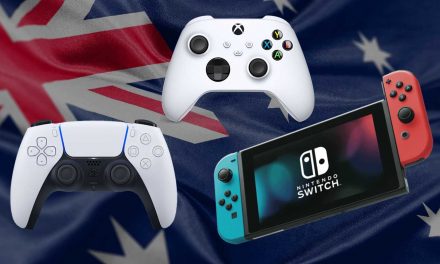
Image: Unsplash
The video game industry has never had more players. It has also never had a harder time keeping them. With 3.42 billion active players globally as of 2024, the audience is enormous, but fragmented across more platforms, titles, and competing entertainment options than at any other point in history. The real war in gaming right now isn’t about who makes the best game. It’s about who holds attention longest.
A Market Packed With Content, Dominated by a Few
The numbers tell a stark story. According to Newzoo data, just five games account for roughly 27% of total player time across the industry. On Steam alone, developers released over 18 thousand new titles in 2024; that’s around 51 per day. Yet the vast majority of those titles capture almost no meaningful share of player time. Discovery is broken, and even well-crafted games disappear within days of launch.
This concentration of attention isn’t unique to video games. Across all forms of digital entertainment (from streaming services to sports betting platforms) a small number of dominant products capture the lion’s share of time. For context, the growth of interactive digital entertainment beyond traditional gaming has been substantial enough that resources like this online casinos guide reflect how other sectors are similarly competing for the same discretionary hours that console and PC titles are fighting to secure. The pie isn’t expanding fast enough for everyone to eat.
For game developers, this dynamic means the cost of player acquisition keeps climbing while the window to make a first impression keeps shrinking.
Mobile Has the Numbers, But Not the Loyalty
Mobile gaming generated approximately $92 billion in revenue in 2024, representing about 49% of the entire global market. Those figures make it the dominant platform by revenue, and the dominant platform by player count. Over 2 billion people play games on mobile devices. However, raw numbers mask a deeper problem: mobile player loyalty is fragile.
Data from Mistplay’s 2025 Mobile Gaming Loyalty Index shows an average 30-day retention rate of just 4.1% across genres. That means the vast majority of players who install a mobile game are gone within a month. Studios compensate with aggressive live-service updates, aggressive ad spend, and constant new content drops, all of which drive up costs without guaranteeing retention.
The developers who crack it tend to follow a tight formula: low-friction entry, fast feedback loops, and social mechanics that pull players back through community rather than content alone. Puzzle and match titles lead the loyalty rankings because they execute this formula consistently, not because the genre is inherently superior.
Console and PC: The Subscription Arms Race
Console gaming generated $51 billion in 2024, and PC gaming added another $43 billion. Both sectors are stable, but the strategies platforms are using to hold players have shifted noticeably.
Subscription services are now central to the retention strategy. Microsoft’s Game Pass reached 34 million subscribers by early 2024, and the logic is straightforward: a subscriber who has access to hundreds of games has less incentive to leave the ecosystem than a player who paid $70 for a single title. The platform becomes the product, not any individual game.
This puts independent studios in a difficult position. Getting a game onto a subscription service provides exposure but often lower per-unit revenue. Staying off one risks invisibility in an increasingly cluttered storefront. Neither path is clean.
Cross-platform play has become another front in the attention war. According to cross-platform gaming statistics, 79% of gamers now use mobile, with 55% also playing on console and 42% on PC. Studios that ignore cross-play risk losing sessions to whichever platform is most accessible at a given moment. Those that support it retain more of a player’s total gaming time across devices.
The Developer Reality in 2025
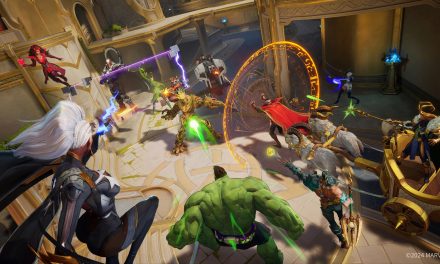
Some titles demonstrate that quality still breaks through. Black Myth: Wukong sold 10 million units (in just three days) and hit 2.4 million concurrent players on Steam; extraordinary figures for a single-player action RPG. Marvel Rivals attracted over 10 million players in its first 72 hours. But these are exceptions backed by significant production values and, in Marvel’s case, an established IP with built-in audience recognition.
For studios without that foundation, the Entertainment Software Association’s industry data consistently reinforces the same point: marketing spend in gaming already runs around 25% of revenue for mid-sized developers (higher than most other software categories) and it keeps rising. Making a great game has become table stakes. Getting players to stay is the actual challenge.
The platforms have the leverage because they have the data, the distribution, and the relationships. The developers have the content. Bridging that gap is where the real competition for player attention is being decided, and there’s no obvious equilibrium in sight.



![[Rumor] Wonders of O trademarked. A sequel to ‘Lies of P’ set in the world of Oz?](https://vgleaks.com/wp-content/uploads/2026/09/lies-of-p-150x150.jpg)

![[Rumor] Is the StarCraft Shooter Real? Leaks, Details, and Blizzard’s Mystery ARG](https://vgleaks.com/wp-content/uploads/2026/09/StarCraft-Shooter-Will-Reportedly-Be-Revealed-at-BlizzCon-150x150.jpg)