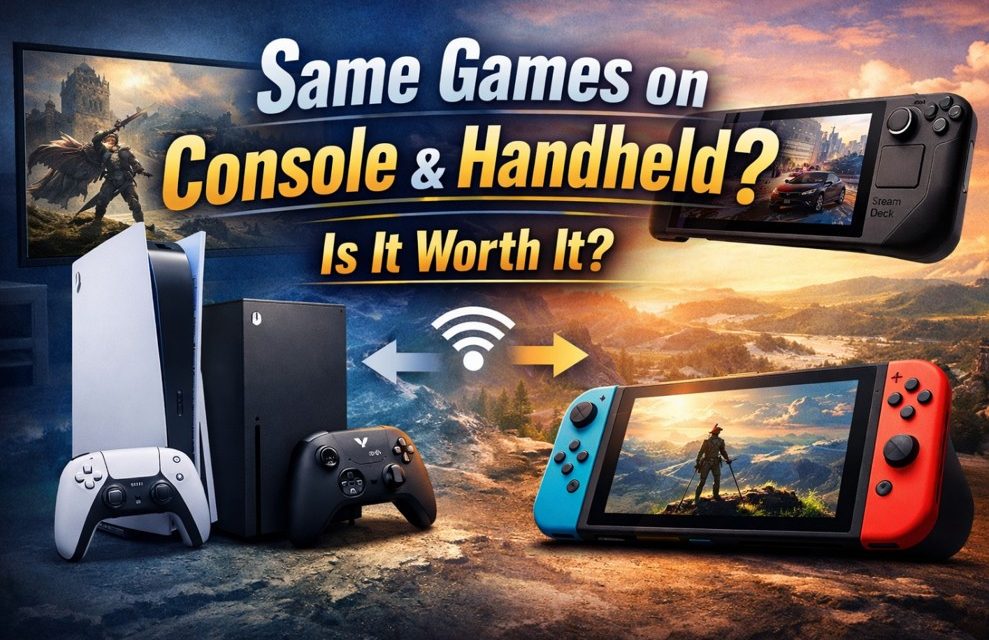
In today’s gaming landscape, many players own both a home console and a handheld device. With platforms like the Nintendo Switch, PlayStation 5, Xbox Series X, and portable systems such as the Steam Deck, it’s common to wonder: Is it advisable to get the same games on console and handheld models?
The answer depends on your gaming habits, budget, and priorities. In this in-depth guide, we’ll explore the pros and cons of owning duplicate titles across platforms, the value of cross-save and cross-progression, and when buying the same game twice actually makes sense.
Meanwhile, if you are looking for another games to explore, specifically Pinoy card games, visit GameZone Table game.
Why Gamers Consider Buying the Same Game Twice
Modern gamers often value flexibility. You might enjoy immersive sessions on a big-screen TV but also want the freedom to continue playing on the go. This is especially true for blockbuster titles like The Legend of Zelda: Breath of the Wild, Elden Ring, or Cyberpunk 2077.
Here are common reasons players buy the same game on both console and handheld:
- Portability and convenience
- Performance differences
- Shared accounts and ecosystems
- Multiplayer access in multiple locations
- Family or shared device use
But does that automatically make it a smart purchase? Not always.
The Advantages of Owning the Same Game on Console and Handheld
1. Seamless Gaming Anywhere
One of the biggest advantages is mobility. A home console offers superior graphics, smoother frame rates, and a cinematic experience. Meanwhile, a handheld device lets you continue your progress while traveling or commuting.
For example, the Nintendo Switch uniquely bridges this gap by functioning as both a docked console and a handheld. However, for systems like the PlayStation 5 and Steam Deck, purchasing separately may be required.
If you value uninterrupted gameplay regardless of location, buying the same title twice can enhance your overall experience.
2. Performance vs. Convenience
Console versions typically deliver:
- Higher resolution (4K vs. 720p/1080p)
- Faster load times
- Stable frame rates
- Enhanced graphical fidelity
Handheld versions may offer:
- Adjustable performance modes
- Battery-optimized gameplay
- Portable access
For visually demanding games like Elden Ring, performance differences can be noticeable. Some players prefer high-end graphics at home and portable flexibility elsewhere.
If performance matters deeply to you, owning both versions can give you the best of both worlds.
3. Cross-Save and Cross-Progression Benefits
This is arguably the most important factor.
Many modern titles support cross-save functionality, allowing you to sync progress between platforms. For example, games within the Xbox ecosystem often support Smart Delivery across the Xbox Series X and Windows PC.
Similarly, some PC-based platforms make it easier to move between desktop and handheld devices like the Steam Deck.
If a game does NOT support cross-progression, buying it twice may feel frustrating, as you’ll need to restart from scratch.
Before purchasing duplicate copies, always check:
- Does the game support cross-save?
- Are DLC purchases shared?
- Is online progression account-based?
4. Multiplayer Flexibility
Owning the same game on multiple platforms can help in households with shared systems. One person can play on the console while another uses the handheld.
For competitive titles or cooperative experiences, this flexibility can be valuable. However, multiplayer access may require separate subscriptions, which increases long-term costs.
The Downsides of Buying the Same Game Twice
1. Financial Cost
Games are not cheap. Purchasing two full-priced versions can cost as much as buying an entirely new title. Unless there’s a major sale or bundled deal, the expense can outweigh the convenience.
Budget-conscious gamers may find it wiser to invest in a broader game library instead of duplicating one title.
2. Limited Playtime
Ask yourself honestly:
Will you actually play both versions frequently?
Many players buy duplicates with good intentions but end up favoring one platform. If your console gaming time dominates your schedule, the handheld copy may gather digital dust.
3. Storage and Ecosystem Fragmentation
Managing downloads, updates, and storage across two devices can become inconvenient. Handheld systems often have limited storage space compared to home consoles.
Additionally, separate ecosystems mean separate friends lists, subscriptions, and account management.
When It Is Advisable to Buy the Same Game Twice
Here are situations where buying duplicate copies makes sense:
You Travel Frequently
If you’re constantly on the move, having your favorite game on both platforms ensures uninterrupted entertainment.
The Game Is Replayable
Open-world RPGs, sandbox titles, and roguelikes benefit from replay value. Games like The Legend of Zelda: Breath of the Wild offer enough depth to justify multiple playthroughs.
Strong Cross-Save Support
If progress seamlessly syncs across platforms, the investment becomes far more practical.
Different Performance Goals
You may want high-fidelity visuals at home and battery-friendly performance on the go.
When It’s Probably Not Worth It
On the other hand, it may not be advisable if:
- The game is short and story-driven
- There is no cross-save support
- You rarely use your handheld device
- You’re on a tight gaming budget
- A subscription service already provides access on one platform
If you only plan to play through the campaign once, duplication offers limited value.
Alternative Solutions
Before buying the same game twice, consider alternatives:
1. Remote Play Options
Some consoles allow remote streaming to portable devices without rebuying the game.
2. Cloud Gaming
Cloud services can reduce the need for duplicate purchases if supported in your region.
3. Hybrid Systems
Devices like the Nintendo Switch eliminate this dilemma by functioning in both roles.
Final Verdict: Is It Advisable?
So, is it advisable to get the same games on console and handheld models?
Yes — if you value flexibility, portability, and seamless cross-save functionality.
No — if budget, limited playtime, or lack of cross-progression makes it impractical.
Ultimately, the decision comes down to your gaming lifestyle. If gaming is a daily hobby and you switch environments frequently, owning duplicate copies can significantly improve convenience and enjoyment.
However, if you primarily game in one setting, your money may be better spent exploring new titles instead.
Key Takeaways
- Cross-save support is the most important factor.
- Portability adds convenience but increases cost.
- Performance differences may justify dual ownership.
- Consider your actual gaming habits before purchasing.
- Hybrid systems reduce the need for duplicate buys.
In the end, buying the same game on console and handheld isn’t automatically wasteful — it’s situational. Evaluate your time, budget, and play style carefully before pressing that second “purchase” button.


![[Rumor] Wonders of O trademarked. A sequel to ‘Lies of P’ set in the world of Oz?](https://vgleaks.com/wp-content/uploads/2026/09/lies-of-p-150x150.jpg)

![[Rumor] Is the StarCraft Shooter Real? Leaks, Details, and Blizzard’s Mystery ARG](https://vgleaks.com/wp-content/uploads/2026/09/StarCraft-Shooter-Will-Reportedly-Be-Revealed-at-BlizzCon-150x150.jpg)