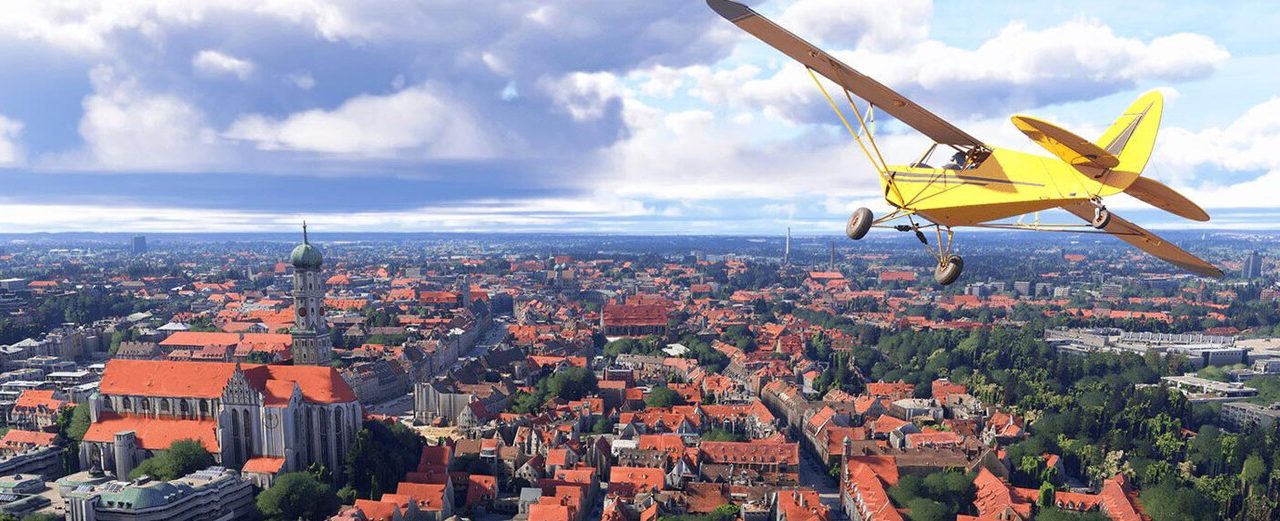
Airplane games used to belong to a very specific group of players. People who cared about engines, altitudes, cockpit switches and runway lights. That world still exists, but the idea of “airplane games” has expanded so much that it now covers everything from full simulations to light mobile games to casino style titles built around tension and timing. Somewhere along the way, flying became a kind of storytelling tool, not just a mechanical challenge.
The Rise of the Everyday Pilot
The most surprising shift is how many players now choose airplane games for relaxation rather than technical accuracy. There is the king and queen of the realistic genre – Microsoft Flight Simulator that still offers the deep, almost meditative experience of cruising over cities and mountains, but a new wave of games stepped in for people who want something lighter. Mobile flying games let players take off in seconds, do quick missions, dodge obstacles or pick up passengers. They feel more like small adventures than simulations.
People enjoy the idea of flight without needing to understand the math behind it. You tap the screen, your plane lifts, and suddenly you are navigating something open and peaceful. These games trade realism for rhythm, and it works because the fantasy of flying doesn’t need perfection. It just needs movement.
The Chaos Type: Dodging, Diving and Quick Decisions
Another branch of airplane games took the complete opposite approach. Instead of calm skies and long routes, these games use fast decisions and unpredictable obstacles. Dogfight games, aerial battle modes and high speed chases give players the thrill of being in the middle of danger without the heaviness of real simulation.
The appeal is simple. You feel the pressure without the commitment. One wrong move and the plane spirals. One quick reaction and you escape. These games reward instinct rather than planning, which is why they became popular among players who want intensity in short bursts.
They also create a kind of muscle memory. You start to read the movement of the screen the same way a player reads a football match or a racing game. After a while you stop thinking and start reacting. That is the part people come back for.
Where Tension Takes Over: Aviator
Then there is Aviator, which sits in its own category. It isn’t a simulation or an adventure. It is an online casino style game built around a single rising curve. The plane takes off, the multiplier climbs and the entire experience becomes a test of timing.
What makes Aviator bet interesting is how it uses flight as pressure rather than pleasure. The moment the climb starts, players begin comparing instinct to patience. Do you cash out early or wait for a bigger moment Every round feels like a small coin toss wrapped inside a heartbeat.
Aviator doesn’t try to look like a pilot’s game, but it borrows one idea from flying perfectly: once you lift, you have to trust your timing.
The Story Driven Sky
A different style of airplane game grew quietly but steadily: narrative flying games. These don’t ask for perfect landings or split second reactions. They use airplanes as part of the story. Your plane might be carrying characters who argue, reconnect, or face danger together. The world moves below you while the story builds in the cockpit.
Games like these use flying as a metaphor. High altitude for distance. Turbulence for conflict. A smooth glide for relief. It is less about how well you fly and more about why you are flying in the first place. People often describe these games as emotional rather than challenging, which is unusual for the genre but shows how flexible airplane games have become.
Why Airplane Games Keep Growing
The reason airplane games spread across so many formats is simple. Flight sits between calm and chaos. It can be a gentle journey or a dangerous sprint. Developers use that flexibility to build completely different experiences that somehow still feel connected.
Some players want the quiet sky. Others want the chase. Some want stories. Some want tension. Airplane games can be all of those things without losing the central image everyone recognises immediately: a small shape moving through open space, always climbing, always searching for the next horizon.
It turns out that flying doesn’t need realism to feel meaningful. It only needs imagination. And that, more than anything, is why airplane games continue to rise.




![[Rumor] Sony Will No Longer Release Single-Player Games on PC](https://vgleaks.com/wp-content/uploads/2026/03/PC-Sony-150x150.jpg)