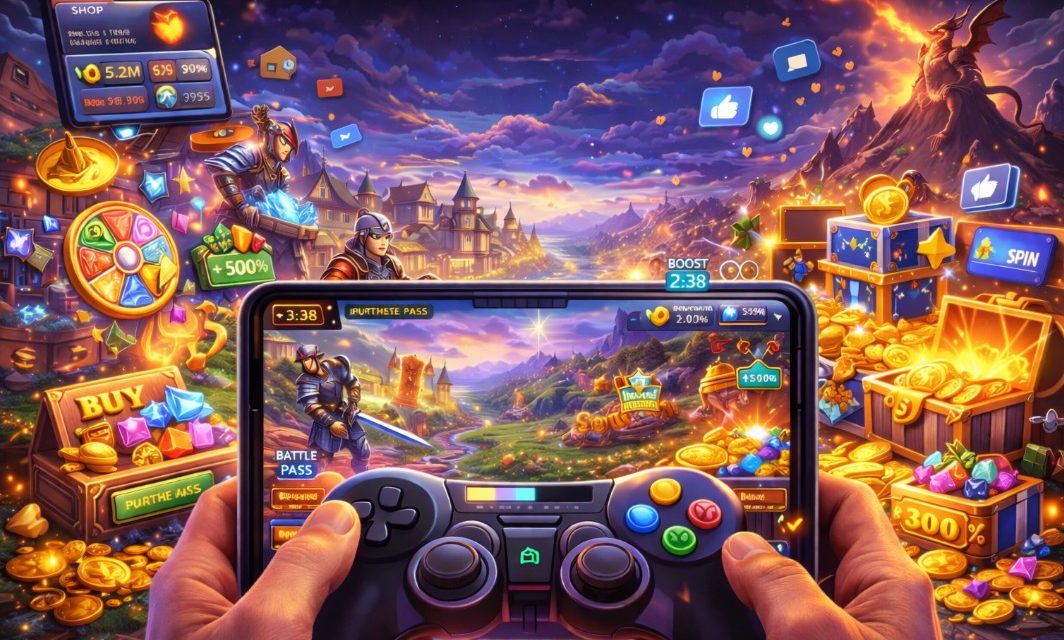
Video game monetisation has evolved far beyond the days of single purchase titles and expansion packs. Today, developers experiment with battle passes, cosmetic stores, and live service models that continuously generate revenue while keeping players engaged. Interestingly, some of these developments echo systems found in the wider digital gambling space, where platforms such as reliable usdt casino websites offering provably fair games demonstrate how transparency and digital currency integration are becoming more common expectations among online users.
From One Time Purchases to Ongoing Revenue Models
In the early era of gaming, monetisation was straightforward. Players bought a game once and accessed all its content. As development costs rose and online connectivity became standard, the industry shifted toward ongoing revenue models.
This transition introduced downloadable content, subscription services, and eventually live service games. These models allowed developers to continue supporting games after launch while generating consistent income streams. However, they also changed how players interact with games, shifting expectations toward continuous updates and evolving content.
The Influence of Reward Based Systems
One of the clearest areas where iGaming trends intersect with video game monetisation is in the design of reward systems. Many modern games use randomised loot drops, seasonal rewards, and tiered progression systems that encourage repeated engagement.
While these mechanics are not new, their sophistication has increased significantly. Developers now carefully balance reward frequency, rarity, and player motivation to maintain long term interest. This mirrors design principles seen in other digital industries that rely on engagement loops and probabilistic rewards.
Importantly, these systems are often designed around perceived value rather than direct financial exchange. Players invest time instead of money, but the psychological structure of anticipation and reward remains similar.
The Rise of Live Service Economies
Live service games have become one of the dominant monetisation models in the industry. Titles in this category are designed to evolve over time, with new content, events, and cosmetic items released on a regular basis.
This model shares structural similarities with iGaming environments, where platforms continuously refresh content to maintain user engagement. In both cases, the goal is to create a sustained ecosystem rather than a one time transaction.
For developers, this approach offers flexibility. Revenue can be generated through optional purchases such as skins, battle passes, or expansion content, while players retain access to the core experience. However, it also requires constant content production and careful balancing to avoid player fatigue.
Digital Currency and Transaction Expectations
Another influence from iGaming trends is the growing acceptance of digital and blockchain based payment systems. As online platforms increasingly adopt cryptocurrencies for faster and more transparent transactions, players are becoming more comfortable with alternative payment methods in gaming ecosystems as well.
This shift has encouraged some developers to explore more flexible monetisation structures, particularly in regions where traditional payment systems may be less efficient. While still not universal, the idea of seamless, borderless digital transactions is gradually shaping expectations for future game economies.
The Psychology of Engagement
At the core of both iGaming and modern video game monetisation is engagement psychology. Systems are designed to encourage return visits, sustained play sessions, and long term investment in digital ecosystems.
Features such as daily rewards, limited time events, and progression milestones are carefully structured to create habitual interaction. These mechanics are effective because they tap into natural behavioural patterns, such as goal setting and reward anticipation.
However, they also raise important discussions about player wellbeing. As these systems become more refined, developers face increasing responsibility to ensure that engagement does not become exploitative or overly restrictive.
Regulation and Industry Awareness
As monetisation models evolve, so too does regulatory oversight. Governments and industry bodies are paying closer attention to how in game purchases and reward systems are implemented, particularly when randomness is involved.
This has led to greater transparency requirements in some regions, as well as clearer communication around odds and probabilities in certain game mechanics. These changes are shaping how developers design monetisation systems, encouraging more ethical and player focused approaches.
Looking Ahead
The future of video game monetisation will likely continue to be influenced by trends seen across digital entertainment industries, including iGaming. While the two sectors are distinct, they share overlapping interests in engagement, retention, and digital economies.
As technology advances, developers will have more tools to create flexible and responsive monetisation systems. The challenge will be balancing innovation with fairness, ensuring that players feel rewarded rather than pressured.
Ultimately, the direction of the industry suggests a continued move toward persistent, evolving game worlds supported by diverse and adaptive revenue models.







![[Rumor] Star Wars Jedi 3 announcement is imminent. It could be released in 2027](https://vgleaks.com/wp-content/uploads/2026/10/star-wars-jedi-survivor-150x150.jpg)

![[Rumor] Marvel’s Venom is still in development](https://vgleaks.com/wp-content/uploads/2026/09/venom-150x150.png)
![[Rumor] A real physical version of GTA 6 could be on the horizon and more real than it seems](https://vgleaks.com/wp-content/uploads/2026/08/leak-GTA-VI-150x150.jpg)