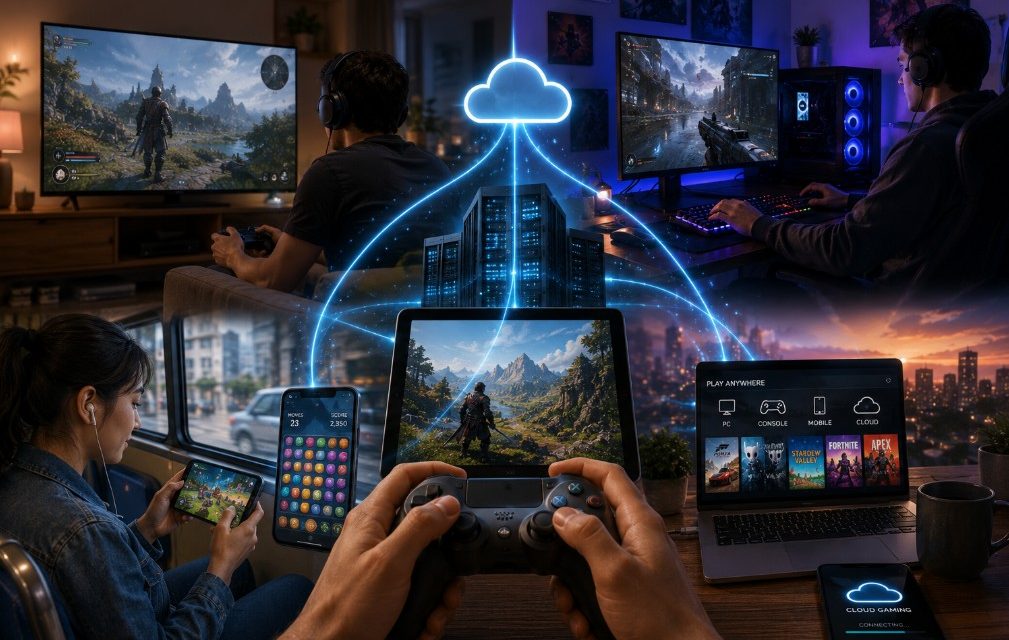
Video games have never been tied to a single room, device, or type of player for very long. Arcades gave way to home consoles, personal computers created new genres, and smartphones turned spare minutes into potential playtime. Each shift changed more than the screen in front of the player. It changed who could join, how people connected, and what developers could build.
That pattern continues because games are both technology and culture. Players adapt available tools to their routines, while studios respond to new habits with different controls, formats, and communities. From a quick puzzle on a phone to a shared world explored across several platforms, modern gaming offers more entry points than any earlier era.
Devices Have Become Gateways Rather Than Limits
For many players, the best way to play depends on where they are and how much time they have. A console may suit a long evening session, while a phone works well for a short strategy match during a commute. PCs remain popular for games that benefit from precise mouse controls, user-created modifications, or highly adjustable settings.
This flexibility is also visible beyond conventional games. Services that let users bet on anything website outcomes through prediction markets show how familiar game-like systems, including choices, competition, and changing results, can extend into new digital experiences. The appeal often comes from participation, not only from watching an event unfold.
Cloud gaming adds another route by running a game on a remote server and streaming the video to a player’s device. In simple terms, the phone, television, or laptop acts like a window into more powerful hardware elsewhere. A stable, fast connection matters because every button press must travel to the server and return as an on-screen response, but the model can reduce the need to own expensive equipment.
Cross-Play Keeps Communities Together
Online games are more enjoyable when friends can enter the same match or shared world, even if they own different devices. Cross-play makes this possible by allowing compatible versions of a game to communicate across consoles, computers, and sometimes mobile devices. It gives groups more freedom to choose hardware without automatically separating their social circles.
Larger combined player pools can also improve matchmaking. Games can place people with similar skill levels into matches more quickly when there are more active participants available. Developers still need to account for differences in controls, since a keyboard and mouse may offer different precision from a controller, particularly in fast competitive games.
Cross-progression solves a related problem. It allows a player’s unlocked items, saved progress, and account identity to follow them between supported platforms. Someone might begin a game on a console, continue on a handheld device, and return to a PC without starting again. That continuity makes games easier to fit around changing schedules.
Creator Communities Turn Players Into Contributors
Many games last longer because players do more than consume the original release. They build custom maps, design cosmetic items, create guides, host servers, and produce videos that help others learn. Modding, which means changing or adding to a game through community-made tools and files, has helped some older titles remain active long after launch.
Streaming and video platforms have made discovery more social. A viewer may see a difficult challenge, a creative building project, or an unusual ruleset and decide to try the game personally. Shared clips can also turn unexpected player behavior into a trend, giving games a life that is partly shaped outside the studio.
User-generated content creates a steady supply of variety, although it requires moderation and clear platform rules. Developers must consider copyright, safety, payment systems, and the reliability of tools offered to creators. When those foundations work, a game can become a space where players continually make reasons for others to return.
Accessibility Broadens the Meaning of Play
New ways to play also emerge when designers remove barriers that once excluded people. Remappable controls let players assign actions to buttons that are more comfortable or manageable. Subtitles, high-contrast displays, text-size options, and visual alternatives to sound cues can make essential information easier to perceive.
Difficulty settings and adjustable assistance are equally important. Features such as slower gameplay, aim support, simplified inputs, or the option to skip a repeated challenge can help more people experience a game’s story and systems. These options do not make every player use the same approach. They allow individuals to choose conditions that suit their needs.
Play Continues to Follow People’s Lives
Gamers keep finding new ways to play because games evolve alongside everyday technology, social habits, and individual needs. More devices, connected accounts, creator tools, and accessibility features have made play less dependent on a single place or standard method. The result is not one replacement for traditional gaming, but a wider range of ways for people to participate on their own terms.





![[Rumor] Star Wars Jedi 3 announcement is imminent. It could be released in 2027](https://vgleaks.com/wp-content/uploads/2026/10/star-wars-jedi-survivor-150x150.jpg)

![[Rumor] Marvel’s Venom is still in development](https://vgleaks.com/wp-content/uploads/2026/09/venom-150x150.png)
![[Rumor] A real physical version of GTA 6 could be on the horizon and more real than it seems](https://vgleaks.com/wp-content/uploads/2026/08/leak-GTA-VI-150x150.jpg)